
ALL STORIES PUBLISHED IN THE ORB (STUDENT NEWSMAGAZINE) OR ON THE MEDIA NETWORKS WEBSITE SOUTHEASTERNMEDIANETWORK.COM

I created the "The Shortlist" section to give our audience a fun and engaging story to read. This story is a mix of opinionated reviews and facts about each location our staff tried. I researched each place and created questions to ask the owner or worker to gather the story behind each location. We combined appetizing photography with our reviews to create an eye-catching spread.
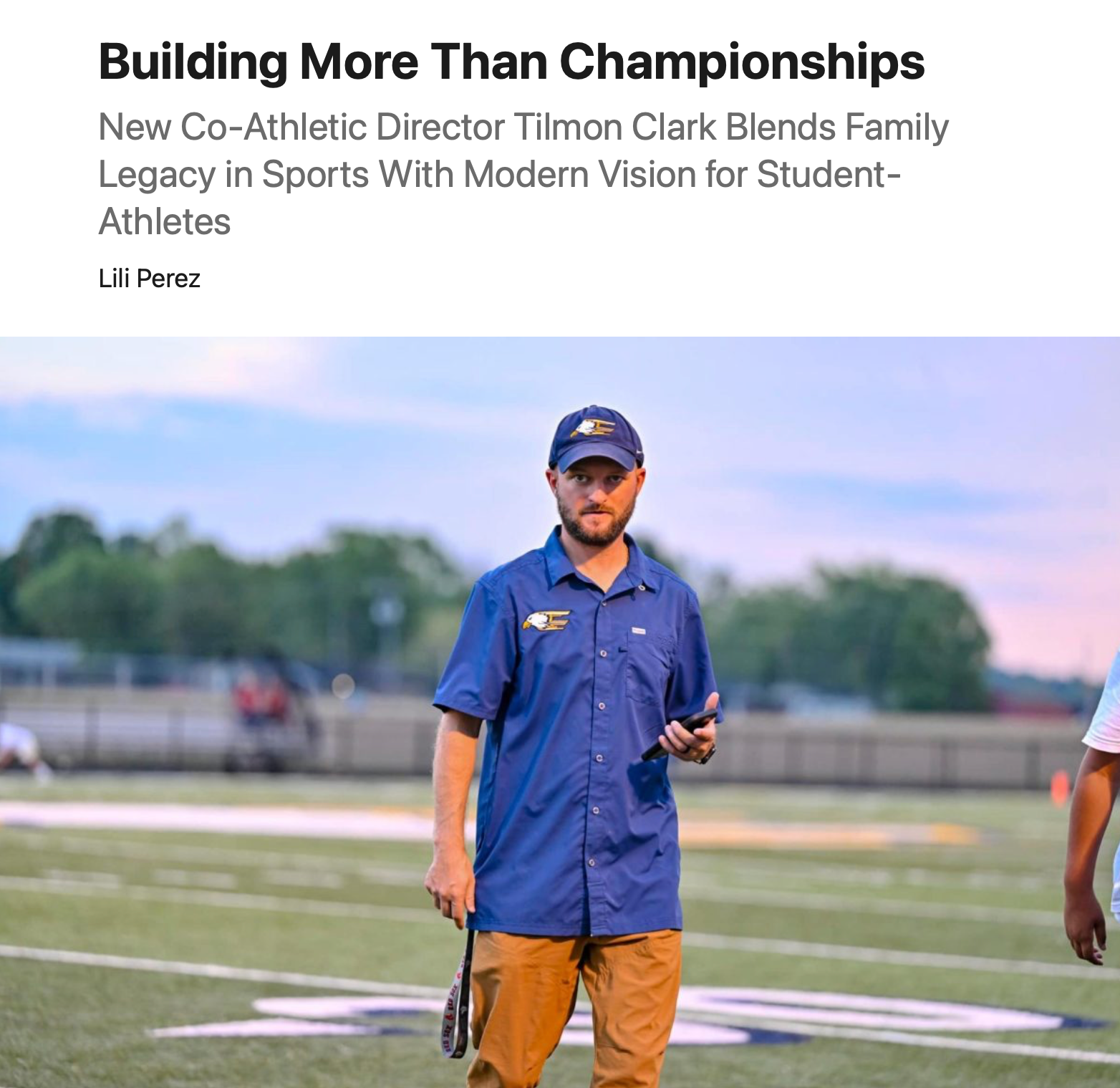
For Tilmon Clark, athletics was not only about competition. It was a family tradition, a career, and currently a platform to help further develop Hamilton Southeastern High School (HSE) athletics.
“I grew up in athletics,” Clark said. “My dad was a longtime high school football coach, and I was a three-sport athlete in high school. I just naturally liked being around sports, teams and coaches, and this job has been really good for me.”
Clark officially began his role this summer as co-athletic director at Hamilton Southeastern, where he works alongside longtime Athletic Director Jim Self. The move comes after a successful run at Delta High School, where he oversaw state championships and academic all-state honors.
Clark was a 2005 graduate of Winchester High School, where he played football, wrestling, and baseball before moving on to Earlham College, where he continued as a two-sport athlete in football and baseball. He later earned a master’s in public administration from Valdosta State University while working as a graduate assistant coach.
His coaching career ranged from Butler Community College to Valdosta State, Ball State University and even the Cleveland Browns, where he worked in draft analytics. At Ball State, he served as director of player personnel, coordinating recruiting operations and helping assemble the program’s classes.
“I put our student-athletes first in any decision I make,” Clark said. “I ask, how can this possibly affect them? That servant-leadership mentality is important.”
At HSE, Clark said his focus is on both tradition and innovation. He wants to focus on the current and past culture, rather than creating a whole new one.
“The important thing is not to forget where you came from at HSE,” he said. “Like the traditions, the past championships and alumni. But we also need to enhance the student-athlete experience and look into the future.”
Part of that future, he said, is embracing technology and media. Having started college, the same year Facebook launched, Clark sees firsthand how social media can make or break a program.
“I have lived on both sides of social media,” Clark said. “You have to meet people where they are, and today that is online. The key is consistency in your message, because people lose interest if you disappear.”
Clark said he intends to serve the HSE community by being visible, approachable and relationship-driven.
“My leadership is a servant-leadership mentality,” Clark said. “I want to serve our community, our coaches and our student-athletes. That starts with building relationships and being there for people.”
He also stressed the balance between competitiveness and development, citing the Indiana High School Athletic Association’s (IHSAA) emphasis on education-based athletics.
“We all want to win championships and hold up trophies,” Clark said. “But we also need to develop our next generation as well.”
Clark expressed his belief that athletics is about school spirit, not just performance. The whole school bleeds blue, not just the athletes.
“People often think they are just at a high school football game,” Clark said. “But look around at the band, choir, dance team, cheerleaders, student workers, and then on top of that, the football team. Athletics acts as the front porch of the school, and that is something I don’t take lightly.”
Clark, who was named District 4 Athletic Administrator of the Year by the Indiana Interscholastic Athletic Administrators Association during his time at Delta, said he is eager to apply lessons from every step of his career.
“Have fun with what you are doing,” Clark said. “Do not expect things to just happen. People do not owe you anything, so do a good job where you are, and people will want to work with you.”
I wrote this story to inform our school and community about our new athletic director. I conducted a sit-down interview in person to gain a deeper angle and backbone for the story. I researched Tilmon Clark's background and experience to inform readers of interesting facts. This story is relevant to my audience and timely, as it was his first semester with us.
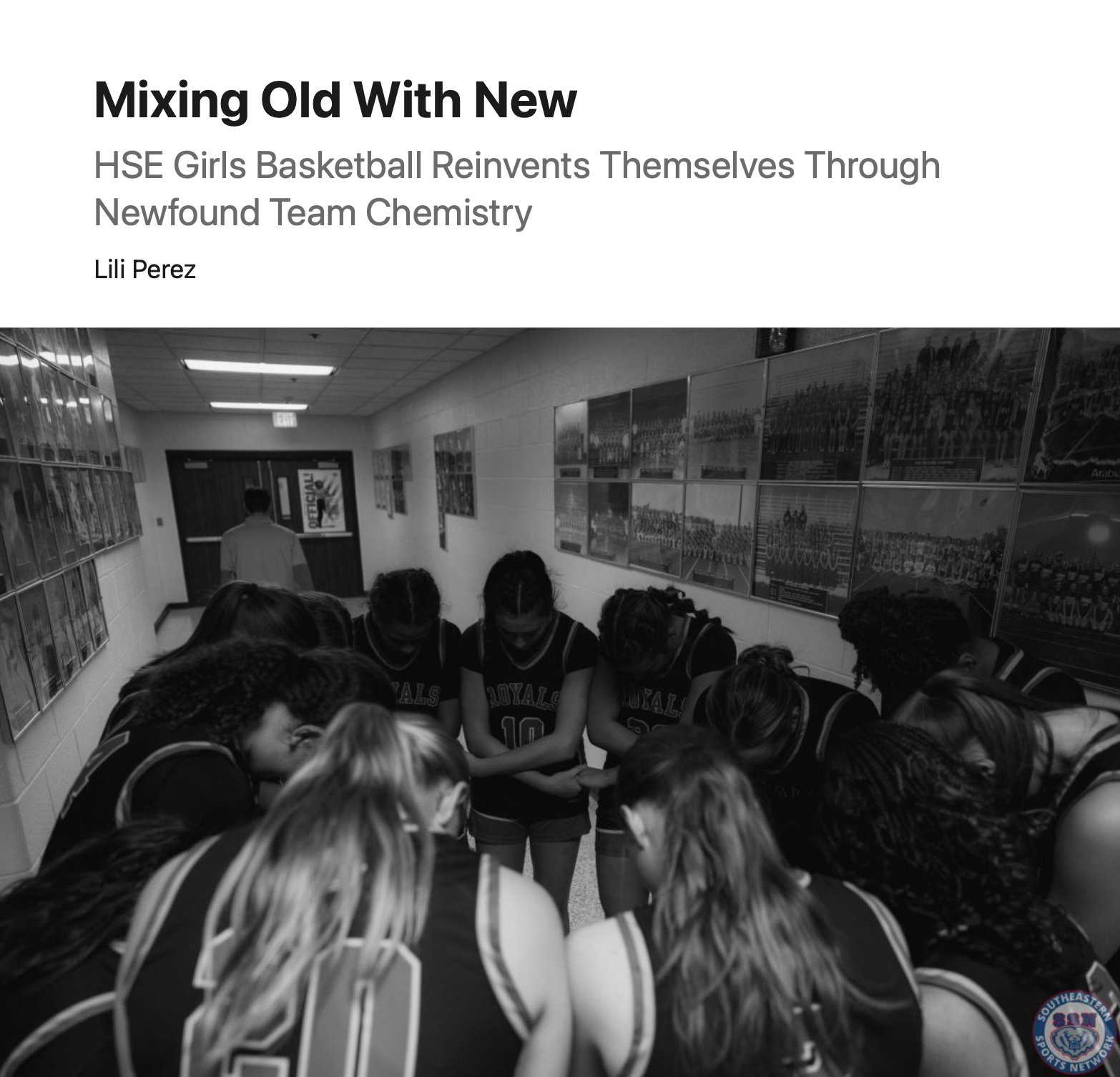
Hamilton Southeastern’s girls’ basketball team rides a high after last year’s IHSAA Sectionals game against Zionsville. After graduating seven seniors last year, the team has spent time and patience building team chemistry and a strong bond.
Senior Antonette “Ant” Green has also embraced a leadership role, stepping into the responsibility of guiding newer varsity players.
“I have tried to be a leader by showing the underclassmen how we do things on varsity,” Green said. “And being a positive and confident voice to the team.”
Green said this year’s chemistry stands out because of how quickly the group bonded despite major roster turnover.
“This year has been so much different than past years because we graduated seven seniors last year,” Green said. “What stands out the most to me is how well everyone is getting along and coming together.”
Part of shaping this new identity involves creating separation from last year’s team rather than trying to replicate it.
“We hope to try to separate last year from this year by not comparing the two teams,” Green said. “Our team last year had a completely different team dynamic than we do this year.”
Senior Kayla Stidham played against Zionsville last season as a junior, scoring 9 points and 10 assists. Her focus this season is on inventing a new legacy for HSE basketball, instead of focusing on last year’s accomplishments.
“My mindset is to just play freely and not worry so much about scoring individually; that will come,” Stidham said. “Working as a team to get good shots will help us win.”
As a senior, Stidham has taken on a larger leadership role in hopes of helping the freshman not only score points but also build relationships.
“I think it has grown to be more of a leadership role,” Stidham said. “Especially being a senior, being able to lead the underclassmen to hopefully make another good run.”
Her leadership extends beyond the court, where she has made intentional efforts to form connections and support younger players.
“I’ve tried to connect with the younger girls not just on the court but also being someone they can reach out to outside of basketball,” Stidham said. “All of the girls are amazing, so it has made it easy for us all to get close pretty fast.”
The preparation for sectionals has focused on both individual matchups and big-picture mentality.
“We focused on our individual matchups as well as plays,” Green said. “And mentally being focused in on the goal of winning.”
As the postseason begins, Green wants the team centered on discipline and purpose.
“We need to have the mindset of winning with a purpose,” Green said. “We must execute the basics that help us wear teams down and win games.”
Stidham has also worked on the mental side of her game, expecting that growth to show during the postseason.
“I have been working on the mental side recently, and I think that will help a lot going into the tournament,” Stidham said.
“We have already learned to build chemistry and not give up on each other no matter what happens on the court,” Green said.
This story was a fun story to write because I really got to know the girls' basketball team this year, and the comparison to last year. I sat down with seniors Ant Green and Kayla Stidham to hear their perspectives on the change in chemistry within the team compared to last year. This story was newsworthy because it was timely, relevant to our school community, and provided insight into a significant shift in team dynamics that directly impacted their season performance.
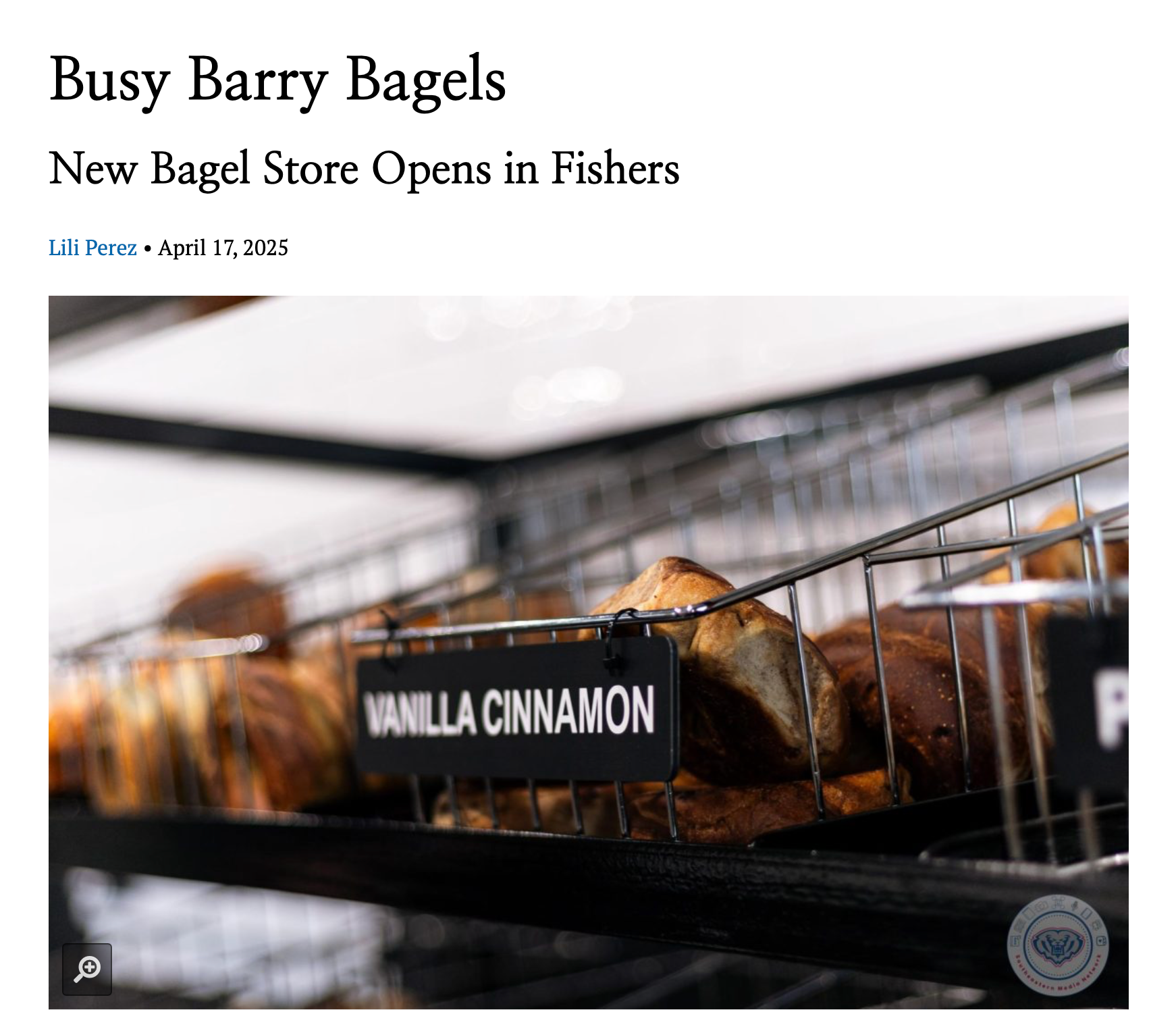
Recently opened at 8684 E. 116th St., Barry Bagels is a new spot for lunch breaks and easy breakfast. The origin of Barry Bagels can be traced back to 1972 when Barry Greenblatt, a native of Detroit, brought fresh-baked bagels to northwest Ohio. Along with his partner, bagel-maker Peter Johnson, Barry opened their inaugural location in Sylvania. They named their establishment “The Bagel Place” and were the first to create boiled and then baked bagels in the region.
Soon after, the menu expanded to include various flavored cream cheeses, deli sandwiches, soups and salads. Nevertheless, the bagels, which were baked fresh daily throughout the day, established the location as one of the area's beloved restaurants. In 1979, Peter retired, and the store was eventually renamed “Barry Bagels”.
Bret and Heather Couturier first opened a location in Carmel’s Clay Terrace, but this was just the beginning. There is now a newly opened Fisher’s location downtown. At all locations, bagels are the center product sold, but the food sold is not limited to only bagels. At first glance, the menu is diverse and fun. Breakfast items range from sandwiches like the “Eggel” to 17 different types of bagels. Customers can also skip the line and order on their website “barrybagels.com”.
Seniors Serena Zentz and Sam Shipley both work at the Fishers location on weekends. Zentz started working at Barry Bagels in mid-February, around two weeks before the Fishers location opened. On the other hand, Shipley is fairly new, having worked at this location for only about four weeks.
“I wanted a job that was mostly mornings so that I wouldn’t waste away my days in the summer,” Zentz said. “The interview was super relaxed and easy. For training, the job itself isn’t crazy hard, so we were mostly thrown right into the work. I really like my coworkers there. They make it a really fun environment.”
Barry Bagels has a very outgoing and upbeat environment with busy rushes and welcoming employees. Although learning all the different types of bagels and toppings while working there may seem intimidating, Barry Bagels is easy to jump into and the people are a big help. The shop itself is colorful and displays all the types of bagels so customers can see the selection.
“I love the vanilla cinnamon bagel with honey brown sugar cream cheese,” Zentz said. “I get it every time because it has the perfect amount of sweetness.”
All the bagels are freshly made in small batches throughout the day to ensure the best-tasting products for customers. No one can go wrong with the fan favorites or a plain and simple bagel.
“My favorite menu item is the double chocolate chip muffin because that is my favorite bakery item of all time,” Shipley said.
On top of bagels, muffins and more, Barry Bagels offers their signature seasoning– “Barry’s Everything Seasoning Mix”. The 9.5-ounce jar of unique Everything Seasoning blend can transform any dish to taste just like a Barry Bagels Everything Bagel. Perfect for seasoning grilled meats, fish, or chicken, as well as soups, pasta, avocado toast, and many other dishes.
For more information on nutrition, careers and history, check out their website, Instagram or X at barrybagels
This story was a feature piece that informed our community about the new Barry Bagels location in Fishers. I researched the history of Barry Bagels to give readers context and background on the establishment. I interviewed two HSE seniors who work at the location to provide a local and relatable angle for my audience. This story was newsworthy because it was timely, as the location had just opened, and it had proximity to our readers since it's a new business in Fishers where HSE students work and can visit.
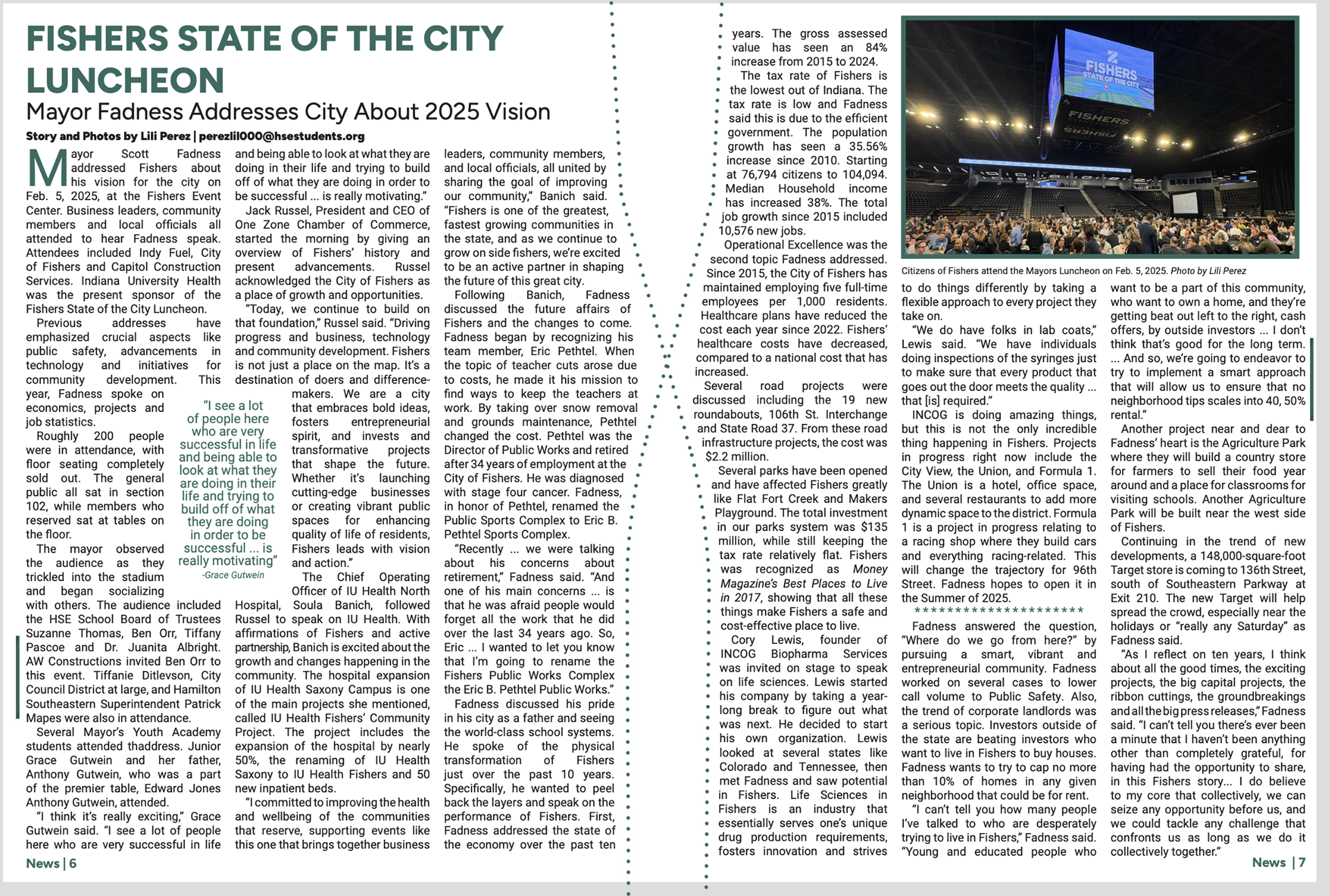
The article "Fishers State of the City Luncheon" is a news story produced live at the mayor's address. I used my live reporting skills to directly quote Mayor Fadness and deepen the story's information. By incorporating multiple sources and topics, I provided a comprehensive and well-rounded story. This story was relevant, timely, and directly impacted the community (proximity). I stayed away from my opinions and directly reported on the facts, which made the end product newsworthy.
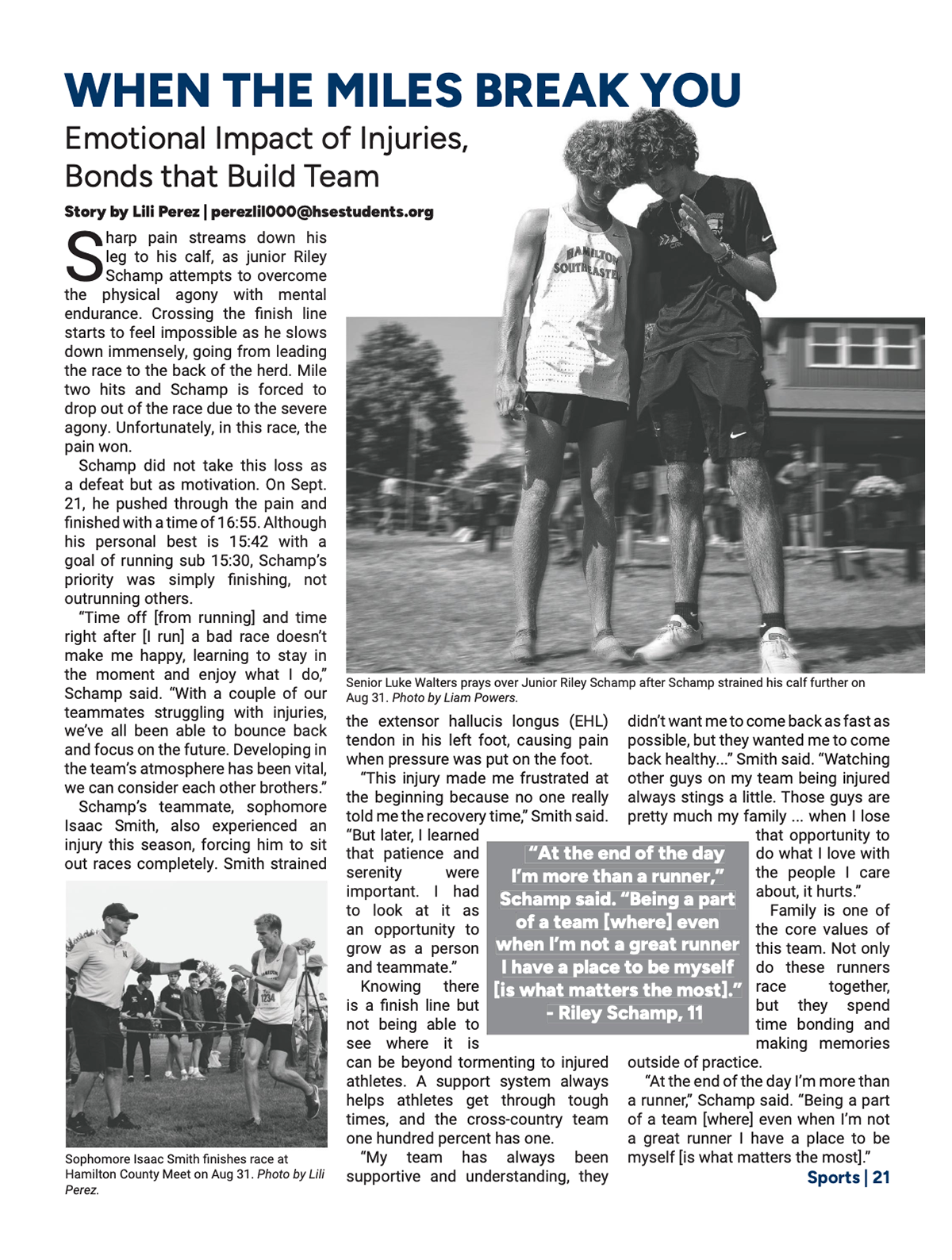
This story was a human interest piece that highlighted the struggles and resilience of injured athletes on the boys' cross country team. I interviewed junior Riley Schamp and sophomore Isaac Smith to capture their personal experiences with injuries and how they overcame the physical and mental challenges. I used descriptive writing and direct quotes to create an emotional connection with readers. This story was newsworthy because it was timely during the cross-country season, relevant to our school community, and provided insight into the team dynamic and individual perseverance that readers could relate to and learn from.
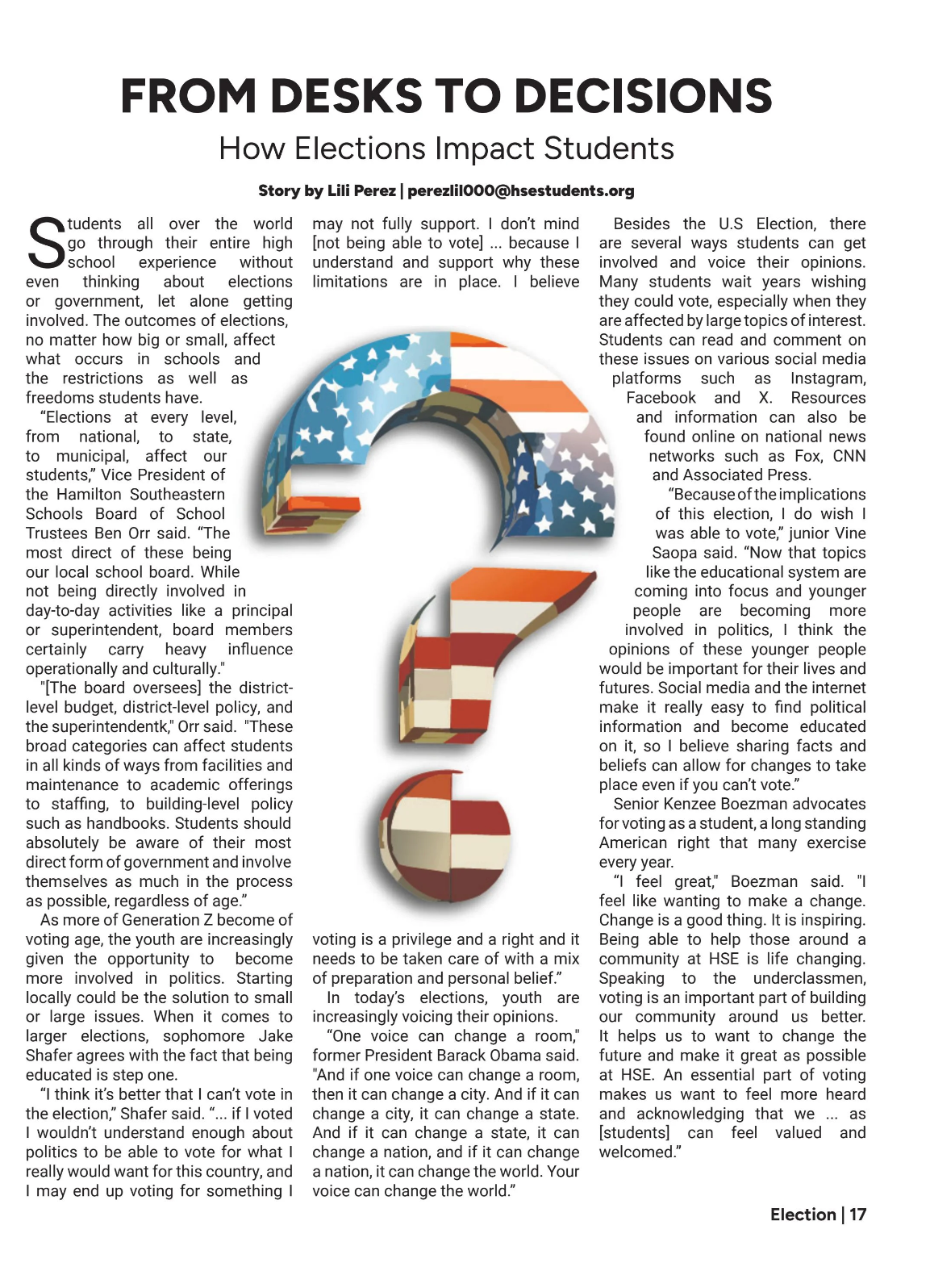
This story explored how elections at every level impact students, even those who can't vote yet. I interviewed Vice President of the Board of Trustees Ben Orr to explain how school board elections directly affect students' daily lives. I also spoke with students of different ages, including sophomore Jake Shafer, junior Vine Saopa, and senior Kenzee Boezeman, to capture diverse perspectives on voting and political involvement. This story was newsworthy because it was timely during election season, relevant to our entire student body, and educated readers on how government decisions impact them directly, encouraging civic engagement regardless of voting age.
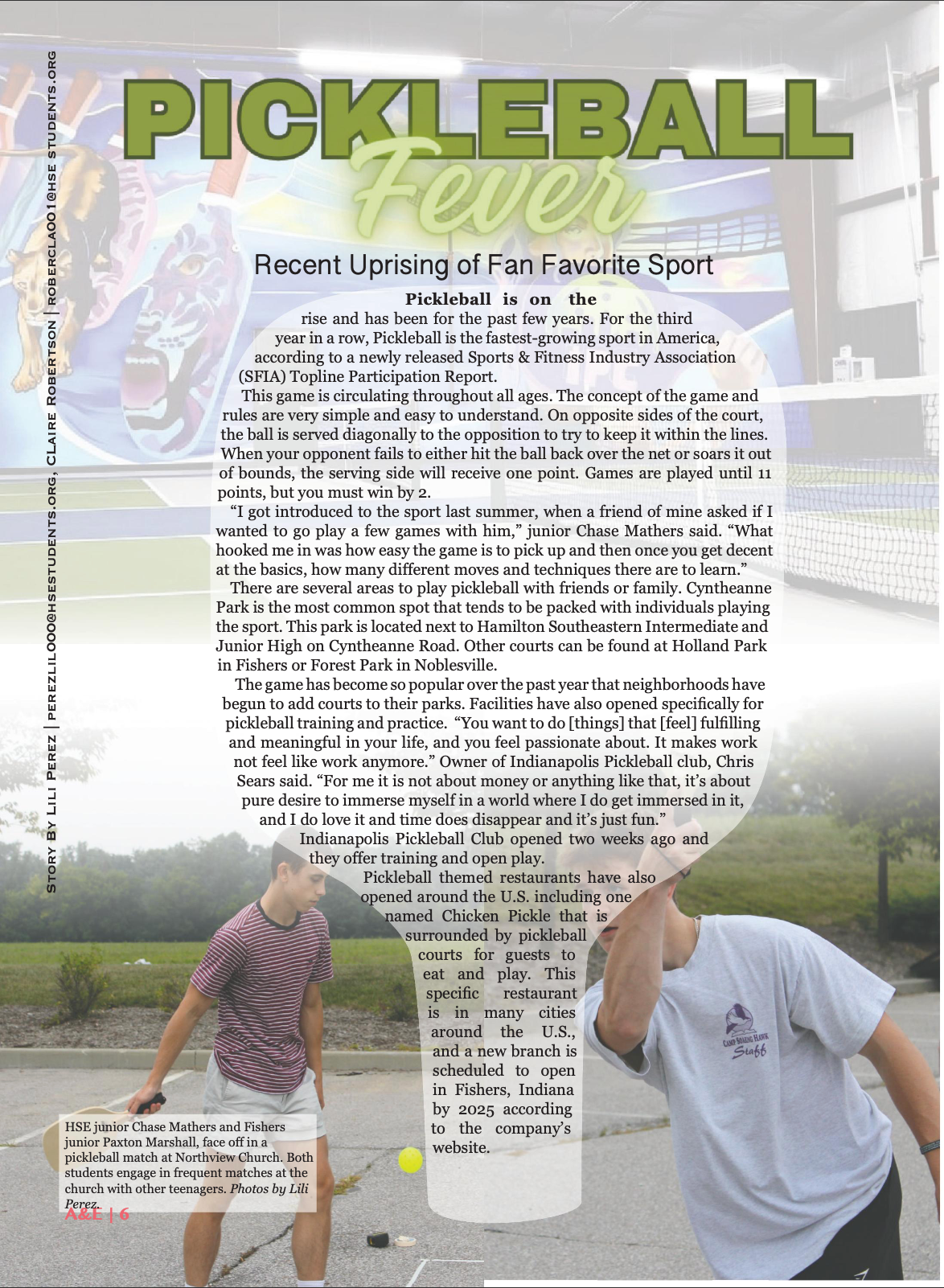
This story informed readers about the rise of pickleball and its growing popularity in our community. I researched the sport's national growth using the Sports & Fitness Industry Association report and interviewed junior Chase Mathers to provide a student perspective. I also spoke with Chris Sears, owner of the Indianapolis Pickleball Club, to give insight into the local pickleball business scene. I included information about where students can play locally, making the story practical and actionable. This story was newsworthy because it was timely with pickleball's rapid growth, relevant to our community with new facilities opening in Fishers, and it highlighted a trend that students could easily participate in.
Dress for Success
Dress for success or dress for expression. The debate of the hour is whether the enforced dress code in the Student Handbook oppresses the students' right to express themselves or sets them up for their futures. The general rule for professional dress is to be conservative, but does this apply to the classroom? The dress code is important because it allows for a more positive atmosphere, keeps them focused and teaches students how to be professional for future jobs and careers.
According to the article “What are the Benefits of the School Dress Code”, “Having a dress code at school encourages a more optimistic educational atmosphere.” Restricting dress not only prohibits students' minds from “entering into any form of viciousness” but also allows for a positive learning experience. Revealing clothing enhances the chances of judgment, ridicule, and harassment. Students are anticipated “to be more creative in the classroom when they are not anxious about what other students are wearing and also don’t feel stressed to follow the latest trends in clothing.”
Censored clothing is beneficial for all students. Yes, there is no denying that men and women face different expectations when it comes to dressing for school, but there is a reason behind dress codes. Dressing scandalously demotes unison and inclusion; kids may be judged for wearing more conservative clothing rather than sticking with the trends. School-employed dress codes allow for a unified school district. Bonneville Academy rationalized that this “encourages the student to concentrate more on their academic and co-curricular activities… then all the learning becomes more interesting and relevant.” Individuality is not being stripped from the students; the school system is just supporting teachers in their professional right to pursue a safe, distraction-free atmosphere.
Not only is school a learning environment, but it is a professional one. Some may say that the dress code is silencing expression, but at what point do you draw the line between a little skin and a half-naked student? Being comfortable and confident can be experienced in professional attire. A study released by the “Social Psychological and Personality Science” journal discovered that dressing in clothing one feels is formal can lead to boosted feelings of power and confidence. Feeling confident is the key to success and building life skills.
School should be enjoyable, but the student body's perception and a respectable environment come first. The dress code is essential because it allows for a safer atmosphere, concentrates students, and educates kids on how to be professional for potential jobs and careers. The HSE Athletic Director, Jim Self, stated it beautifully: “Dress for success."
This story was an opinion piece that argued in favor of school dress codes and their benefits for students. I researched the topic using sources like "What are the Benefits of the School Dress Code" and the "Social Psychological and Personality Science" journal to support my argument with facts and studies. I incorporated a quote from HSE Athletic Director Jim Self to add a local perspective. This story was newsworthy because dress code policies are constantly debated in schools, making it timely and relevant to our student body. It encouraged readers to think critically about a policy that directly impacts their daily lives.